Disposing Hazardous Items in Camden: Legal Steps
If you are dealing with old paint, batteries, solvents, a broken fluorescent tube, or something that just feels a bit too risky to leave in the household bin, you are not alone. Disposing hazardous items in Camden can feel oddly complicated at first, especially when you are trying to stay legal, avoid fines, and keep everyone safe. The good news is that the legal steps are manageable once you know what counts as hazardous, how to sort it, and when to hand it over to a licensed carrier or specialist collection service.
This guide walks through the practical side of lawful hazardous waste disposal in Camden: what the rules are trying to protect, the step-by-step process, common mistakes, and the kind of checks that make life easier. You will also find a checklist, a comparison table, and a few real-world scenarios that should make the whole thing feel much less murky. Truth be told, most problems come from guessing. Better not to guess.
Why Disposing Hazardous Items in Camden: Legal Steps Matters
Hazardous items are not just "things you should probably not throw away casually." They can leak, react, catch fire, contaminate other waste, or expose cleaners, drivers, neighbours, and waste workers to avoidable harm. In a dense place like Camden, where homes, flats, businesses, and shared collection routes sit close together, the consequences of careless disposal can travel further than people think.
The legal side matters because waste is regulated in the UK, and hazardous waste is treated with extra care. That does not mean every item needs a dramatic procedure. It does mean you should identify what you have, keep it separated, and use an appropriate disposal route. If you are moving house, clearing a garage, or emptying a storage unit, those odd items in the back corner often become the last thing people want to think about. Then they end up in the wrong bag. Easy mistake. Not a harmless one.
There is also a practical angle: following the correct steps helps you avoid rejected collections, mixed waste contamination, and awkward last-minute scrambles. For businesses, the stakes are higher still. Duty of care, record-keeping, and safe handling all come into play. Even for households, the principle is the same: take reasonable care and do not create a risk for anyone else.
Key takeaway: lawful hazardous disposal is mostly about correct identification, segregation, and using a proper collection or drop-off route. The fewer assumptions you make, the better.
How Disposing Hazardous Items in Camden: Legal Steps Works
The process usually starts with classification. Before you do anything else, ask a simple question: is the item likely to be harmful if it leaks, shatters, burns, or is mixed with general waste? That covers many common items, from car batteries and household chemicals to pesticide containers, some electronics, and certain light bulbs.
Once you know you have a hazardous item, the next step is to keep it separate from ordinary rubbish. That sounds basic, but it is where lots of problems begin. A half-empty container of solvent tossed into a general bin can create fumes, spill into other waste, or become a risk during transport. If you are packing for a move, it is better to isolate it early than discover it at the bottom of a box beside cutlery and cords. That sort of surprise is nobody's favourite part of moving day.
After that, you need to choose a legal disposal route. For many residents, this means using a council-run collection point or arranging a specialist waste service that can handle the item safely. For businesses, it may mean using a licensed waste carrier and keeping the relevant paperwork. Some items can also be returned to a retailer or supplier under take-back arrangements, depending on the product type. The important part is that the route matches the item.
If the waste is part of a wider clearance, it may be easiest to bundle the non-hazardous items separately and keep hazardous materials in a clearly labelled container. Services that handle removals and packing can help with the logistics of moving everything else while you deal with the risky items using the proper channel, such as packing and unpacking support or a flexible man and van service for the rest of the load.
Key Benefits and Practical Advantages
Doing it properly is not just about compliance. It makes the whole clean-up process less stressful, less messy, and frankly less expensive in the long run.
- Safer handling: you reduce the risk of leaks, burns, cuts, and exposure to fumes.
- Fewer collection problems: correctly separated waste is less likely to be rejected or delayed.
- Lower contamination risk: hazardous items do not spoil recyclable or general waste streams.
- Better compliance: you are more likely to meet your legal duties, especially if you run a business.
- Less disruption: when the waste is sorted early, removals and clearances run more smoothly.
There is also a mental benefit that people underestimate. Once the dangerous stuff is dealt with, everything else feels easier. The garage, cupboard, shed, or office store cupboard suddenly looks less chaotic. You can think again. A small win, but a real one.
For homeowners planning a larger clear-out, it may be worth combining the safe removal of general household items with a service like home moves support or, for heavier objects that are no longer needed, furniture pick-up for non-hazardous items. Keep the hazardous items separate, though. That bit matters.
Who This Is For and When It Makes Sense
This guide is for anyone in Camden who has items that cannot simply go into a regular black sack or mixed skip. That includes renters, homeowners, landlords, office managers, shop owners, and people clearing out after a renovation or move.
You especially need this if you are dealing with:
- paint, varnish, thinners, adhesives, or solvents
- batteries, small battery packs, or damaged power cells
- fluorescent tubes, compact fluorescent bulbs, or other fragile lamps
- aerosols, pressurised containers, or chemical sprays
- cleaning chemicals, bleach, or specialist household products
- old electronics with potentially harmful components
- oil, fuel, or containers with residue
- medical or sharps-related waste that needs special handling
It also makes sense to review the rules if you are downsizing, moving office, or clearing a property after a tenancy. In those situations, hazardous items often turn up in a back cupboard or under a sink, quietly waiting to become a problem later. If your move involves a lot of sorting, a service such as house removalists or office relocation services can help with the main clearance while you isolate anything hazardous for lawful disposal.
Commercial users should be especially careful. Offices, workshops, retailers, salons, and small catering businesses may generate waste that looks ordinary at first glance but is not. A spray can, a cleaning fluid, a toner cartridge, or a damaged battery bank can cross the line pretty quickly.
Step-by-Step Guidance
Here is the cleanest way to approach lawful hazardous disposal in Camden without overcomplicating things.
1. Identify the item
Read the label, check the packaging, and think about how the item behaves if damaged. If it is flammable, corrosive, reactive, toxic, pressurised, or contains batteries or chemicals, treat it as potentially hazardous until confirmed otherwise.
2. Separate it immediately
Put the item away from general waste, recycling, heat sources, food, and anything that could puncture or leak through packaging. If you are in a flat or shared building, keep it somewhere secure and dry. Under the sink is common. Not ideal. Better to use a sturdy box or tray with a note on it.
3. Keep it in the original container where possible
Original containers usually show the product name and warning labels, which helps with identification. If the original container is damaged, use a compatible secondary container and make sure it is stable and sealed.
4. Do not mix different hazardous materials
Mixing chemicals is a bad idea even if they seem similar. Leftover paint, solvent, and cleaning fluid should not be poured together. Same with batteries and loose metal objects. Keep like with like.
5. Check the appropriate disposal route
Depending on the item, you may need a council collection point, a retailer take-back scheme, or a licensed waste carrier. If the waste forms part of a move, storage clearance, or office relocation, planning this early prevents a last-minute panic.
6. Arrange safe transport
Transport the items upright, secured, and away from passengers or food. If the load is part of a larger move, you may want a vehicle large enough to keep the hazardous items isolated from the rest of the consignment. A moving truck or removal truck hire may be useful for the non-hazardous side of the job, while the hazardous items are handled separately according to the correct route.
7. Keep any required records
For households, that might simply mean keeping a note of what you disposed of and how. For businesses, the paper trail matters more. Retain receipts, transfer notes, or other records as appropriate. It is a boring task, yes, but it can save trouble later.
8. Clean and check the area afterwards
Once the hazardous items are gone, inspect shelves, cupboards, and storage areas for residue or hidden leaks. A faint chemical smell or a sticky patch on the shelf is a sign to clean carefully and ventilate the room.
Expert Tips for Better Results
After enough clear-outs, a few patterns become obvious.
Label everything clearly. If you have several similar containers, write the contents on the outside with a marker. It saves time and reduces mix-ups. That little bit of clarity helps more than people expect.
Use a "hazard box" early in the process. During a move or clearance, set aside one rigid box or tub for risky items only. If you only remember this halfway through the job, fair enough; start then. Better late than mixed in with everything else.
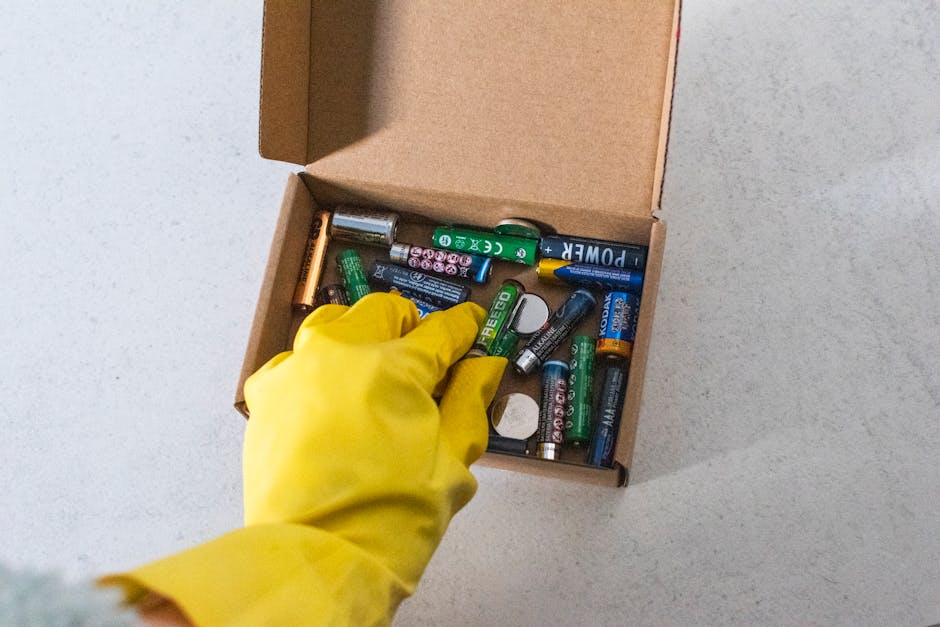
Keep batteries taped or isolated. Exposed terminals can create short-circuit risk. The same goes for damaged battery packs. Do not let them rattle around loose in a bag.
Think about the sequence of the job. Hazardous items should usually be identified before the main packing begins, not after the van is already loaded. That way, you can avoid re-opening sealed boxes and sorting through clutter at the end of the day.
Ask the right question when you are unsure. Instead of "can I throw this away?", ask "what is the safest lawful route for this item?" That shift in mindset helps. A lot.
If the hazardous waste is part of a bigger decluttering project, it can be useful to handle the bulky non-hazardous items with help from a local moving team, while leaving the regulated waste to the proper disposal channel. For example, some people pair a broader clearance with man with van support for transport and sorting, then deal with the hazardous materials separately.
Common Mistakes to Avoid
Most disposal mistakes are not dramatic. They are ordinary, rushed, and easy to miss.
- Throwing hazardous waste into general bins: this is the classic one and still the most avoidable.
- Mixing chemicals: even small quantities can react or create fumes.
- Breaking containers open without a plan: one spill can become a bigger clean-up than the original item.
- Storing items near heat or sunlight: some materials become less stable or more likely to leak.
- Assuming "empty" means safe: residues can still matter.
- Forgetting about hidden waste during a move: drawers, cupboards, and under-bed storage often hide the awkward stuff.
- Using an unsuitable carrier: for regulated waste, the disposal route needs to be legitimate and appropriate.
One mistake people make in busy households is packing everything too quickly because the moving date is looming. You hear tape ripping, boxes stacking, doors opening and closing, and suddenly the little tin of paint ends up in the wrong pile. It happens. The fix is simply to slow that part down, just enough.
Tools, Resources and Recommendations
You do not need a specialist toolkit for most household situations, but a few basic items help enormously:
- sturdy plastic tubs or rigid boxes
- permanent marker pens for labelling
- packing tape for securing lids or caps where suitable
- disposable gloves for handling dirty or dusty containers
- absorbent material or old cloths for minor drips
- a torch, especially for cupboards and lofts where old containers tend to hide
For larger clearances, planning helps more than tools do. Make a simple list: what you have, how many items, whether anything is broken, and whether transport is needed. That list becomes useful when booking removals, storage, or a collection. If you need help with the heavy lifting side of things, commercial moves can be relevant for business premises, while home moves is more suited to domestic transitions.
It can also help to separate services by job type. Non-hazardous bulky items might be managed through furniture pick-up, while tightly packed items that need careful handling might benefit from packing and unpacking services. That leaves the hazardous waste to its own lawful route, which is really the safest way to keep things tidy.
Law, Compliance, Standards, or Best Practice
In the UK, hazardous waste must be handled with care and disposed of through lawful routes. For households, the key duties are usually about safe segregation and proper handover. For businesses, there is a higher compliance burden, including the duty to ensure waste is passed to an authorised carrier and managed responsibly.
Best practice generally includes the following:
- identifying the waste accurately before disposal
- keeping hazardous items separate from general rubbish and recycling
- storing items safely until collection or drop-off
- using a reputable and appropriately licensed waste route
- retaining records where required, especially for business waste
If you run a business in Camden, it is wise to treat waste procedures as part of routine operations rather than an afterthought. A labelled container in the stockroom, a staff note on what not to mix, and a clear handover process can prevent a lot of hassle later on. It does not need to be fancy. Just consistent.
One important note: if you are ever unsure whether something counts as hazardous, err on the side of caution. That does not mean panic. It just means pause, check, and keep it isolated until you know the right route.
Options, Methods, or Comparison Table
Different disposal routes suit different situations. Here is a simple comparison to help you choose.
| Method | Best for | Pros | Watch-outs |
|---|---|---|---|
| Household sorting and council route | Small household quantities of common hazardous items | Simple, lawful, often practical for one-off items | May need careful timing and item separation |
| Licensed waste carrier | Business waste or larger mixed clear-outs | More flexible and suitable for regulated waste streams | Requires choosing the right provider and keeping records |
| Retailer or product take-back | Certain batteries, lamps, or equipment | Good for specific products and reduces storage time | Not available for every item |
| Separate handling during a move | Households and offices with hazardous items mixed into a larger clearance | Keeps the move organised and reduces contamination risk | Requires planning so hazardous items are not loaded by mistake |
For many Camden residents, the best solution is a blend of methods. The move team handles the ordinary items, while the hazardous waste is segregated and sent down the correct legal route. Simple, but effective.
Case Study or Real-World Example
Imagine a small flat clearance near the centre of Camden. The resident is moving out after years in the same place, and the cupboards have accumulated the usual oddments: old batteries, half-used paint tins, a broken light tube, and a cleaner with a faded warning label. None of it looks dramatic. It is just... there.
At first, everything is packed together. Then the person notices the chemical smell from one bottle and realises the risk. They stop, unpack the risky items, and place them in a separate rigid box. The bulky furniture and boxes go with a standard moving service, while the hazardous items are kept out of the main load and dealt with through a proper disposal route.
The difference is small but important. No leaks in the van. No confusion at the end of the day. No last-minute rummaging. The move feels calmer because the risky part was treated as its own task.
That is really the point. Hazardous waste does not need panic. It needs structure. Once you give it that, the job becomes much more manageable.
Practical Checklist
Use this quick checklist before you dispose of hazardous items in Camden:
- Have I identified every item that could be hazardous?
- Are all hazardous items separated from general waste and recycling?
- Are containers sealed, stable, and clearly labelled where possible?
- Am I keeping chemicals, batteries, and sharp items apart?
- Do I know the correct disposal route for each item?
- Do I need a specialist collection, council route, or licensed waste carrier?
- Have I kept records or notes, especially for business waste?
- Are the items stored away from children, pets, heat, and moisture?
- Have I planned transport so nothing leaks or tips over?
- Have I checked the area afterwards for residue or forgotten containers?
If you can answer yes to most of those, you are in good shape. If not, do not rush it. Better to pause for ten minutes than create an avoidable mess for the next ten days.
For larger home or office projects, you may also want to coordinate with broader moving support such as speaking to the team about your requirements before the move date gets too close. And if you want to understand how the service handles your details, the site's privacy policy and terms and conditions are there for a reason, even if they are not the most thrilling reading on a Tuesday afternoon.
Conclusion
Disposing hazardous items in Camden does not need to be complicated, but it does need to be deliberate. Identify the item, keep it separate, choose the right lawful route, and do not mix it with ordinary waste just to get it out of the way. That simple discipline protects people, keeps your move or clearance on track, and helps you stay on the right side of compliance.
Whether you are clearing a kitchen cupboard, emptying a workshop shelf, or preparing a home or office move, the same principle holds: sort the risky stuff early and handle it properly. The rest of the job becomes much easier, and honestly, a lot less stressful.
Get a free quote today and see how much you can save.
One good decision at the start can save a great deal of hassle at the end. That is usually how the best jobs go.
Frequently Asked Questions
What counts as a hazardous item in a Camden home?
Common examples include paint, solvents, batteries, aerosols, fluorescent tubes, certain cleaners, fuel residue, and some electronics. If an item can leak, react, burn, or harm someone if handled badly, treat it with caution until you know the correct disposal route.
Can I put hazardous waste in my normal household bin?
Usually no. General bins are not meant for items that can leak, ignite, or contaminate other waste. The safer approach is to separate the item and use the appropriate collection or drop-off method.
Do I need special paperwork for household hazardous waste?
Most households do not need formal waste transfer paperwork in the same way businesses do, but it is still smart to keep a note of what you disposed of and how. That helps if you need to remember the route later.
What should a business in Camden do with hazardous waste?
Businesses should be more structured. Use an authorised disposal route, keep records, and make sure the waste is handled by an appropriate carrier or collection service. If in doubt, treat it as a compliance matter, not just a clear-out task.
Are old batteries classed as hazardous?
Many batteries should be treated carefully because they can leak, overheat, or short-circuit. Keep them separate, avoid mixing damaged and undamaged ones, and use a suitable collection route.
Can I take hazardous items with me when I move house?
You can transport some items if they are secured and lawful to move, but it is often better to dispose of them before moving day. That reduces risk in the van and keeps the rest of the job simpler.
What if I am not sure whether an item is hazardous?
Do not guess. Separate it from other waste, keep it sealed if safe to do so, and check the label or product information. If you still cannot tell, treat it cautiously until you confirm the right route.
Is there a difference between hazardous and bulky waste?
Yes. Bulky waste is about size or awkwardness, while hazardous waste is about risk. A sofa may be bulky but not hazardous. A small bottle of solvent may be tiny but still need special handling.
Can a removals team help with hazardous items?
A removals team may help move the rest of your belongings, but hazardous items usually need their own proper disposal path. The sensible approach is to keep them separate and ask how the non-hazardous part of the job will be handled.
What is the safest way to store hazardous items before disposal?
Use a sturdy, upright container, keep the items away from heat, moisture, children, and pets, and do not mix different chemicals. If a container is damaged, place it in a compatible secondary container and handle it carefully.
What should I do if a hazardous container leaks?
Stop handling it directly, keep others away, and contain the spill if it is safe and small enough to do so. If the leak is significant or fumes are strong, do not improvise. Get appropriate help and make safety the priority.
How do I make a hazardous clearance less stressful?
Start early, sort items into categories, keep a dedicated hazard box, and handle the risky items separately from the main move or clear-out. It sounds basic, because it is. Basic is often best.