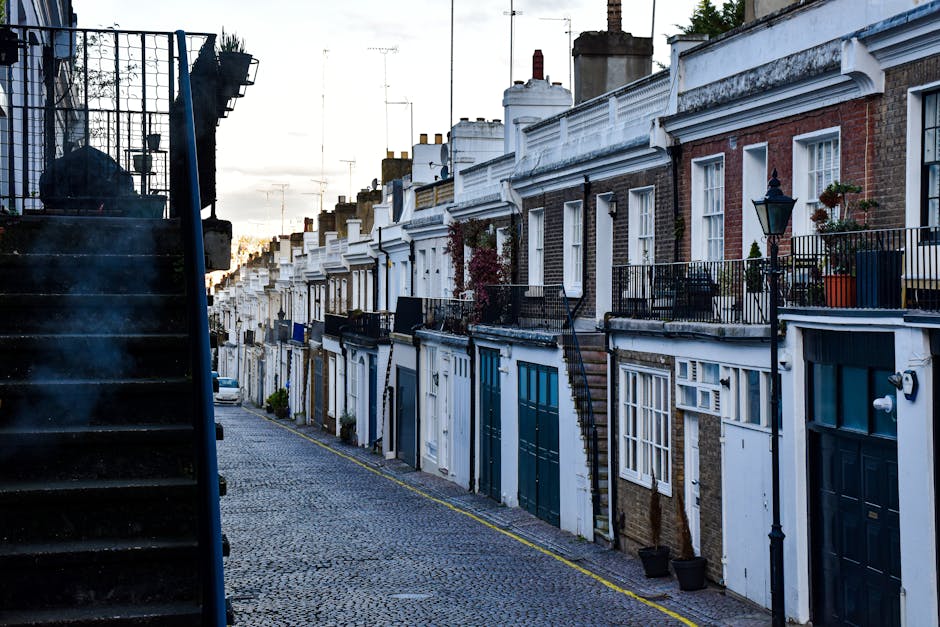
Camden removals for Mornington Crescent flats tight access tips

Moving out of a flat near Mornington Crescent can feel straightforward right up until you meet the real challenge: tight access. Narrow stairwells, awkward door swings, limited waiting space, and busy Camden streets can turn a small move into a surprisingly fiddly one. That is where Camden removals for Mornington Crescent flats tight access tips become genuinely useful. The right planning makes the difference between a calm move and a day full of delays, damage worries, and a lot of heavy breathing on the stairs.
This guide breaks down how to prepare, what movers usually look for, where problems tend to appear, and how to make a flat move in this part of London much easier. If you are weighing up home help, a smaller vehicle, or a full packing service, you will find practical advice here. No fluff. Just the stuff that saves time and stress.
Why Camden removals for Mornington Crescent flats tight access tips Matters
Mornington Crescent has that classic Camden mix of character buildings, older conversions, compact apartment layouts, and streets that can feel busy even on a quiet day. That is lovely for everyday living, less lovely when you are trying to get a sofa through a hallway that was probably designed before sofas became larger than wardrobes.
Tight access matters because it affects almost every part of the move:
- how long loading takes
- how many people are needed
- what size vehicle can actually reach the building
- whether large items need dismantling first
- the risk of scuffs, bumps, or last-minute reshuffling
In our experience, the biggest issue is not the distance between homes. It is the few metres between the front door and the van. That stretch can decide whether the move feels organised or chaotic. If the lift is tiny, the stairwell is narrow, or the entrance is blocked by bins and parked cars, the job needs a more careful plan. Simple as that.
For many flats, a smart approach is to combine careful packing with a service that suits the access. A smaller vehicle, a man and van service or even a larger vehicle for clear access situations can be more practical than assuming a standard removal truck will do everything. If you also need help with box prep, packing and unpacking support can take a huge amount of pressure off the day.
Key takeaway: the tighter the access, the more important the planning. Measure first, book appropriately, and keep the route from flat to vehicle as clear as possible. That is the short version, really.
How Camden removals for Mornington Crescent flats tight access tips Works
A well-run flat move in Camden usually starts before the van arrives. Someone assesses the property, the route, the number of items, and the likely pinch points. Then the move is matched to the building rather than forced into a one-size-fits-all setup.
Here is the practical flow:
- Access is checked early. This includes stairs, lift size, corridor width, parking options, and whether there is space to unload without blocking traffic.
- Items are sorted by difficulty. Bulky wardrobes, beds, sofas, and white goods are identified first.
- Furniture is prepared. Legs may be removed, mirrors wrapped, drawers emptied, and fragile items boxed separately.
- The right team and vehicle are chosen. For some jobs, a flexible smaller team is better than overcommitting to a large lorry.
- Loading is sequenced carefully. Heavy or awkward items go in first, with enough protection to prevent movement.
- Arrival and unloading are managed around access. If the street is narrow or parking is restricted, timing becomes crucial.
That sounds organised because it is. And honestly, it needs to be. A flat move near Mornington Crescent can go from manageable to awkward very quickly if the mover arrives with the wrong-sized vehicle or no idea where they can stop. The best outcome usually comes from honest upfront detail: say the stair count, say whether there is a lift, say if the front door opens onto a cramped landing. The awkward bit is worth mentioning. Better now than on the day.
If you are moving from a home in the area, a service like home moves support can be a sensible fit for general domestic relocations, while house removalists may be useful if the job is bigger or includes more furniture. For very compact moves, smaller handling options may simply be more practical.
Key Benefits and Practical Advantages
Getting the access plan right is not just about avoiding hassle. There are real practical gains to doing it properly.
- Less damage risk. Narrow doors and stair corners are where paintwork, table legs, and fridge doors usually take a hit.
- Faster loading. If the path is cleared and the team knows the constraints, they can keep moving instead of pausing to rethink every item.
- Less lifting fatigue. This sounds obvious, but if a mover has to carry a heavy sofa down three flights and then walk a long distance to the vehicle, the job gets harder fast.
- Better vehicle choice. Not every move needs a huge truck. Sometimes a smaller, more nimble setup is the smarter choice in London.
- Lower stress for you. Truth be told, when the logistics are handled well, the whole day feels less personal. You are not fighting the building.
There is also a hidden benefit: better communication. Once you start thinking about access, you naturally think about timing, parking, lift bookings, and packaging. That helps the whole move become more controlled. The move stops being a mystery and becomes a list of manageable steps. And that is a relief.
For some customers, especially if they have a mixture of furniture and a few single items, a furniture pick-up service can also help with clearing pieces that do not need to go into the new flat. Less clutter, fewer trips. Nice and clean.
Who This Is For and When It Makes Sense
This topic is especially relevant if you live in or are moving into:
- a top-floor flat with no lift
- a converted Victorian or Edwardian property
- a mansion block with narrow communal corridors
- a flat with awkward rear access or shared entrance space
- a building on a busy Camden road where parking is limited
It also makes sense if you are moving with awkward items like:
- large wardrobes
- king-size beds and mattresses
- glass tables
- bookcases
- white goods
- musical instruments
Students, young professionals, couples moving into their first shared place, and long-term residents downsizing all run into the same access headaches. Different reasons, same stairs.
Commercial customers near Mornington Crescent sometimes need similar planning too, especially if they are shifting office furniture, IT equipment, or archive boxes through narrow shared access points. In those cases, commercial moves or office relocation services may be more appropriate than a standard home move. For larger logistics, the right vehicle matters as much as the right people, which is where moving truck options or removal truck hire can come into the conversation.
Step-by-Step Guidance
If you want the move to go smoothly, use this sequence. It is not fancy, just effective.
1. Measure the important spaces
Measure your biggest items first, then measure the narrowest parts of the route: doorways, hall turns, stair width, lift dimensions, and any sharp corners. A tape measure and ten minutes can save a lot of regret. If a wardrobe is 82 cm wide and the tightest doorway is 80 cm, you already know dismantling is not optional.
2. Check the building access early
Ask whether there is a lift, whether it is working, whether there are time limits, and whether the building allows furniture moves at certain hours. Some blocks are fine with moves but awkward about noise, parking, or shared hallways. Better to know before the day arrives, not when neighbours are looking out of the window.
3. Decide what must be dismantled
Bed frames, large tables, and some wardrobes are easier to move in pieces. It may feel slower at first, but dismantling often saves time overall. Keep screws and fittings together in labelled bags. Tiny bag. Big difference.
4. Declutter before packing
There is no point carrying unnecessary clutter through tight access. Sort through books, kitchen bits, old cables, and duplicated household items. If something is no longer worth moving, remove it before moving day. That includes bulky items that are cheaper to replace than transport.
5. Choose the right moving format
If access is difficult and the load is moderate, a smaller team may be more effective than a large vehicle. For example, man with van help can suit smaller flat moves where flexibility matters more than capacity. For more demanding jobs, a fuller crew may be the safer call. The point is not to book the biggest option. It is to book the right one.
6. Protect the route
Use floor coverings, corner protectors, and proper wrapping for vulnerable furniture. Hallways in older flats can scuff easily, and once a chip appears on a painted wall, everyone notices it. A little protection goes a long way.
7. Keep the exit clear on the day
Have keys ready, bins moved, pets secured, and a clear path to the front door. If the building allows it, reserve or hold space near the entrance. Every extra metre between the flat and the van adds time and effort.
8. Load in a sensible order
Heavy, sturdy items go in first. Fragile boxes and soft items fill the remaining gaps. That keeps the load stable and helps prevent damage. It also makes unloading easier later, which your future self will quietly thank you for.
Expert Tips for Better Results
Here are the small things that make a big difference in tight-access Camden moves.
- Send photos of the access route. A few clear pictures of the hallway, stairs, lift, and entrance can tell a mover far more than a quick description.
- Use labels that actually help. Instead of just "kitchen," write "kitchen fragile" or "kitchen open first." It saves time at both ends.
- Wrap handles and corners. Those are the bits that snag first on door frames.
- Think about timing. Early starts can be helpful in busier parts of Camden before the street gets crowded.
- Keep one essentials bag separate. Keys, charger, tea bags, medicines, and important documents should not be buried in a box pile.
- Be honest about awkward items. The mysterious "it'll probably fit" approach is how people end up stuck on the stair landing, which is never fun.
One of the best practical habits is to imagine the move as a sequence of handoffs. Flat to hallway. Hallway to stairwell. Stairwell to pavement. Pavement to vehicle. If any one of those steps is awkward, the whole move slows down. Once you see it that way, you can plan around the weak point instead of hoping it disappears.
If you are relocating an office or a business base nearby, a properly planned office relocation service can reduce downtime and protect equipment. And if you are looking for a wider support structure around the move, it helps to understand the company behind the service through the about us page before you commit.
Common Mistakes to Avoid
Tight-access moves go wrong for familiar reasons. The good news is they are avoidable if you catch them early.
- Not measuring properly. Guessing is a terrible strategy when doors are involved.
- Booking a vehicle that is too large. A van that cannot park near the entrance creates more problems than it solves.
- Forgetting about stairs and corners. A straight doorway is rarely the issue. The turn immediately after it usually is.
- Leaving packing too late. Last-minute packing leads to poor box quality, loose items, and broken handles.
- Ignoring building rules. Some flats have move windows, lift booking rules, or noise expectations.
- Underestimating heavier items. One sofa is never "just one sofa" when it has to travel down three flights.
- Not clearing the route outside. Bins, bikes, and random stored items all become obstacles on moving day.
There is also a mental mistake people make: they assume the move will be fine because the flat is small. In reality, small flats can be harder because everything is squeezed into a tighter route. Less room means less forgiveness. That is just how it goes.
Tools, Resources and Recommendations
You do not need a huge kit, but a few basic tools make tight-access removals far easier.
- Tape measure: for doors, furniture, stairwells, and lift openings
- Marker pens and labels: for clearer box identification
- Strong packing tape: because weak tape always fails at the wrong time
- Furniture blankets and wrap: useful for doorways, mirrors, and polished surfaces
- Basic screwdriver or Allen key set: for dismantling beds and tables
- Zip bags for fittings: keeps screws and brackets together
- Floor protection: especially useful in communal hallways and older flats
If you are not sure what level of support you need, it can help to compare the service style against the amount of access space available. Some moves only need a flexible man and van arrangement, while others need a fuller domestic setup such as house removalists. For extra help with packing, unpacking, or heavy sorting, packing and unpacking services can take the pressure off the day itself.
And if you want to ask questions before booking, the simplest route is usually to use the contact page. A short conversation often clears up more than a long email chain ever will. Strange but true.
Law, Compliance, Standards, or Best Practice
For a flat move in Camden, the most important compliance point is usually practical rather than dramatic. You need to respect building rules, local parking restrictions, neighbour access, and safe handling practices. If the street is busy or parking is limited, plan ahead rather than assuming you can stop anywhere. London streets have a way of reminding people who is in charge.
Best practice usually includes:
- checking whether a building manager or landlord needs advance notice
- avoiding blocked communal walkways
- protecting shared walls, lifts, and floors
- ensuring heavy items are handled by enough people
- keeping valuables and personal documents separate
If a move involves electrical appliances, disconnect them safely before transit. If furniture is awkward or heavy, do not force it through a gap that clearly is not suitable. That is not caution for caution's sake. It is common sense. It also helps reduce the chance of damage claims or neighbour complaints, which nobody wants, frankly.
When in doubt, follow the building's own moving rules, check access arrangements well in advance, and choose a service level that fits the property rather than trying to improvise on the day.
Options, Methods, or Comparison Table
Different kinds of support suit different flat moves. The best choice depends on what you are moving, how much access you have, and how much time you want to spend doing the heavy lifting yourself.
| Option | Best for | Strengths | Trade-offs |
|---|---|---|---|
| Man and van | Small to medium flat moves | Flexible, often practical for tighter streets, good for fewer items | May not suit very large or complex moves |
| House removalists | Larger domestic relocations | More support for furniture, packing, and coordination | May be more than you need for a very small flat |
| Moving truck | Moves with larger volume and space | Better capacity for larger loads | Can be awkward where street access is tight |
| Removal truck hire | DIY-led moves | Useful if you want to manage the loading yourself | More physical effort and more responsibility for planning |
The main thing to remember is that bigger is not always better in Mornington Crescent. A smaller setup that can actually get close to the building often beats a larger vehicle that has to park further away. You can feel the difference almost immediately on the day.
Case Study or Real-World Example
Picture a two-bedroom flat just off Mornington Crescent with a narrow stairwell, a small lift that barely fits a loaded trolley, and a front entrance sharing space with bins and bikes. The move includes a bed frame, sofa, dining table, four chairs, boxes of books, and a few fragile kitchen items. Not a massive job, but definitely one that can get messy if it is approached casually.
The first smart step is to separate what must travel whole from what can be dismantled. In this kind of property, the bed frame and dining table are usually worth taking apart. The sofa may need careful angle-checking before it even leaves the room. A few photos of the hallway help the mover judge where a trolley might catch.
On moving day, the team keeps the route clear, protects the door frames, and loads the heaviest furniture first. The lift is used where possible, but the narrowness means some items still need to be carried down the stairs. The result is not glamorous, but it is controlled. No drama, no panicked "pivot it the other way" moments on the landing. Just steady progress.
That kind of move is exactly why access planning matters. The same flat, with the same furniture, can feel easy or exhausting depending on whether the team knows what they are walking into. And honestly, those five minutes of planning before the move often save an hour on the day.
Practical Checklist
Use this before moving day. It is simple, but it covers the important bits.
- Measure your largest furniture items
- Measure doors, stair turns, and lift dimensions
- Check whether the lift is working
- Ask about move times and building rules
- Confirm parking or unloading space
- Decide which items need dismantling
- Label fragile and priority boxes clearly
- Prepare floor and wall protection
- Keep keys, documents, and chargers separate
- Set aside an essentials bag for the first night
- Tell movers about any tight corners or awkward access points
- Arrange help for heavy or unusually shaped items
If you tick these off, the move usually feels far less chaotic. Not perfect, because moves never are. But much easier.
Conclusion
Mornington Crescent flat moves are not difficult because they are impossible. They are difficult because the access has to be respected. Once you treat the route, vehicle size, packing order, and building layout as part of the move itself, things start to click into place.
That is the real lesson behind Camden removals for Mornington Crescent flats tight access tips: plan for the tight bits first, not last. Measure carefully, choose the right support, keep the route clear, and be honest about the awkward parts. It sounds basic because it is. But basic done well saves a lot of grief.
Get a free quote today and see how much you can save.
And if you are still at the stage of deciding what help you need, take your time. A good move is rarely rushed, and a calm one feels better all round.
Frequently Asked Questions
What makes Mornington Crescent flat removals tricky?
The main issue is access. Older buildings, narrow staircases, compact hallways, limited parking, and shared entrances can make even a small move slower and more awkward than expected.
Do I need a full removal truck for a flat move in Camden?
Not always. Smaller moves often suit a man and van setup better, especially where parking and access are tight. The right choice depends on furniture volume and how close the vehicle can get to the entrance.
Should I dismantle furniture before moving day?
If the item is large or awkward, yes, usually it helps. Beds, tables, and wardrobes are often easier to move in pieces. Just keep all fittings together in labelled bags.
How do I know if my sofa will fit through the stairwell?
Measure the sofa's widest points and compare them with the narrowest turn, landing, and doorway on the route. If the numbers are very close, it is safer to plan for partial dismantling or a different moving angle.
What should I tell the movers before booking?
Be clear about floor level, lift size, stair width, parking restrictions, bulky items, and any access issues. Photos help too. A short set of images is often better than a long description.
Is morning or afternoon better for a move in Mornington Crescent?
Earlier in the day is often easier because streets may be less congested and building access tends to be simpler. That said, timing depends on the building rules and your own schedule.
What happens if the lift is too small?
The team will usually use the stairs for items that do not fit safely. That is why it helps to know the lift dimensions beforehand, especially in older apartment blocks.
How can I reduce damage in a tight-access flat move?
Use protective wrapping, cover floors where possible, remove obstacles from hallways, and avoid forcing furniture through gaps. A careful route is often the biggest protection of all.
Can packing services help with tight access moves?
Yes. Good packing makes items easier to stack, carry, and load in the right order. It can also reduce the number of last-minute problems on moving day, which is worth a lot when access is tight.
Are commercial moves handled differently from home moves?
Usually, yes. Commercial jobs often involve more coordination, equipment, and timing concerns. If you are moving a business space, a commercial or office-focused service is often the better fit.
What if I only need to move a few large items?
That is exactly where flexible smaller services can be handy. If you have one sofa, a bed, or a handful of bulky items, a lighter move setup may be more practical than a full-scale removal vehicle.
Where should I start if I am not sure what service I need?
Start by measuring the access route and listing your largest items. Then compare that with the level of help you want. If you are unsure, contact the team and explain the building layout and the items you are moving. That usually clears things up quickly.